

 December 11, 2025
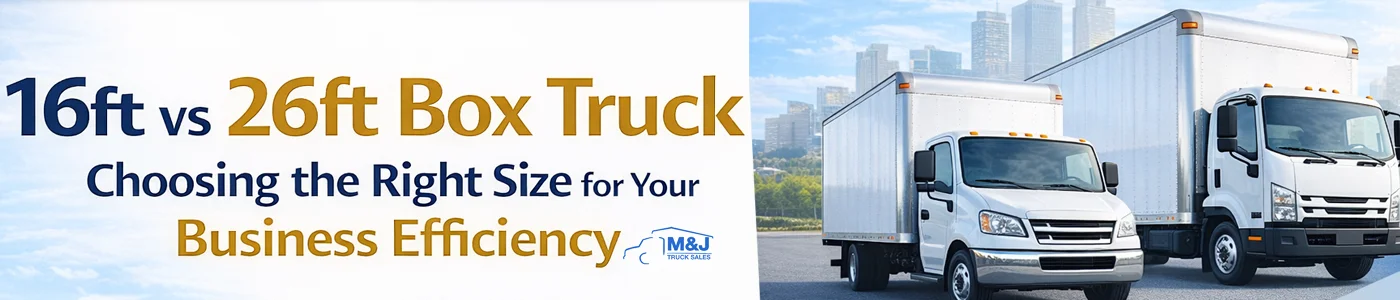
16ft vs 26ft Box Truck: Choosing the Right Size for Your Business Efficiency
When you run a delivery or logistics business, the truck you choose can make or break your daily operations. It affects how smoothly your team moves cargo, how many trips you need to finish a job, how much fuel you burn, and even how stressed your drivers feel behind the wheel. Two of the most common options you’ll come across are the 16ft box truck and the 26ft box truck . Each has its own strengths, quirks, and best use cases. Let’s take a friendly deep dive into both so you can pick the perfect fit for your business.
Why Box Truck Size Matters for Your Business
The size of your truck isn’t just about stuffing more boxes inside. It’s really about staying efficient. Choose a truck that’s too small and you’ll be stuck making extra trips, eating up fuel and time. Go too big and you may deal with tight turns, higher fuel bills, and even stricter licensing rules. For small operations working mostly in the city, a 16ft truck often does the trick. But for companies hauling larger loads or running regional routes, a 26ft truck starts looking like the smarter pick.
Understanding Box Truck Sizes
Dimensions and Cargo Space
A 16ft box truck typically gives you around 800 to 900 cubic feet of storage. That’s enough for small deliveries, pieces of furniture, or equipment. A 26ft truck nearly doubles that, offering roughly 1500 to 1700 cubic feet. With that space, you can handle bigger moves, more pallets, or higher volume routes with fewer runs.
Common Uses for Each Truck Size
A 16ft truck shines in busy cities. It slips through tight streets, parks far more easily, and handles quick stop and go deliveries like a champ. A 26ft truck is built for big jobs. Think large furniture moves, regional freight, or warehouse transfers. It carries more, saves you repeat trips, and keeps your operation running smoothly on high volume days.
Payload Capacity: What They Can Handle
Payload determines how much weight your truck can safely carry. A 16ft box truck can usually take on around 6000 to 8000 pounds. That works great for smaller businesses delivering moderate loads. A 26ft truck is a heavyweight performer with a payload between 12000 and 15000 pounds. If you’re regularly moving bulk items or heavy pallets, this difference is huge.
Box Truck Payload Comparison Chart
| Truck Size | Cargo Volume | Payload Capacity | CDL Required |
|---|---|---|---|
| 16ft | 800 to 900 cu ft | 6000 to 8000 lbs | No |
| 26ft | 1500 to 1700 cu ft | 12000 to 15000 lbs | Often Yes |
Maneuverability and Driving Comfort
While payload and cargo space grab attention, maneuverability often decides whether a truck actually feels good to use daily.
Driving a 16ft Truck
With its shorter wheelbase, a 16ft truck offers a tight turning radius. Drivers love how easily it handles narrow alleys and crowded city streets. Parking is less of a headache, and even newer drivers feel more comfortable.
Handling a 26ft Truck
A 26ft truck demands more skill. It needs more space to turn, more room to reverse, and a confident driver behind the wheel. But on highways and wide industrial roads, it moves smoothly and efficiently. If your routes rarely require squeezing into tight spots, this size works beautifully.
Licensing Requirements
Most 16ft trucks fall below the 26000 pound GVWR limit, so a regular driver’s license is enough. A 26ft truck often exceeds that weight, especially when fully loaded, so a Class B CDL may be required. If your team doesn't already hold CDLs, this is an important factor before expanding your fleet.
Fuel Efficiency and Cost Per Mile
A smaller truck naturally burns less fuel. A 16ft box truck usually costs about one dollar and twenty five cents to one dollar and fifty cents per mile to operate. A 26ft truck averages around one dollar and seventy five cents to two dollars and ten cents per mile. Even though the larger truck costs more per mile, the ability to carry far more cargo may reduce total trips and balance things out.
Reliability and Maintenance
Two of the most trusted names in the box truck world are Hino and Freightliner.
Hino 268 Dependability
The Hino 268 is well known for its strong diesel engine and long lasting build. Businesses appreciate how rarely it breaks down, especially under heavy daily use.
Freightliner M2 Durability
The Freightliner M2 is popular for its versatility and easy access to parts. Fewer delays due to maintenance mean more predictable deliveries for your customers.
No matter which truck you pick, staying on top of maintenance keeps your fleet running smoothly. Regular oil changes, frequent brake checks, tire inspections, and proper record keeping help you avoid surprise breakdowns.
Commercial Truck Financing and Used Options
Buying brand new isn’t always necessary. Reliable pre owned trucks offer a budget friendly way to expand your fleet. Dealers like M&J Truck Sales carry both 16ft and 26ft box trucks , allowing businesses to get quality trucks without huge upfront expenses. Their flexible financing programs also make it easier for growing companies to invest in the right vehicle without cash flow stress.
When a 16ft Box Truck Is the Better Choice
A 16ft truck is perfect if you operate mainly within cities, handle smaller loads, or want lower overall operating costs. It’s also an easy option if you don’t want to deal with CDL requirements. Tasks like last mile deliveries, flowers, catering, small furniture, and retail inventory transfers fit this size well.
When a 26ft Box Truck Makes More Sense
When your business handles bigger cargo, fewer trips, and longer routes, the 26ft truck becomes the clear winner. It’s ideal for moving companies, large retail deliveries, warehouse distribution, and regional freight. If your loads often exceed eight thousand pounds, this size keeps your operations smoother and far more productive.
Comparing Cost, Efficiency, and Productivity
A smaller truck saves money and handles tight spaces with ease, while a larger truck cuts the number of trips required for heavy loads. The best choice really depends on your daily routes, cargo volume, driver skill levels, and long term goals. Many businesses eventually use a mix of both to cover every type of delivery without compromising efficiency.
Tips to Boost Box Truck Efficiency
Choose the right size for your cargo. Train drivers for better fuel habits. Use route planning tools to avoid wasted mileage. Stick to regular maintenance routines. Consider purchasing used trucks to save money without sacrificing quality.
Conclusion
Choosing between a 16ft and 26ft box trucks comes down to understanding your business needs. If you mostly handle city routes, smaller loads, or want something easy to maneuver, a 16ft truck is a great fit. If your goal is to move large quantities in fewer trips, especially across longer distances, a 26ft truck delivers the power and space you need. Once you consider your routes, fuel costs, driver licenses, and budget, the right choice becomes crystal clear.
FAQs
Q1: Can a 16ft box truck handle furniture deliveries?
A 16ft truck can handle small to medium furniture loads, but bigger moves are easier with a 26ft truck.
Q2: Do I need a CDL for a 16ft truck?
Not usually, since most 16ft box trucks fall below the CDL weight limit.
Q3: Which truck is more reliable, Hino 268 or Freightliner M2?
Both are solid. Hino is loved for engine longevity, while Freightliner offers easy access to replacement parts.
Q4: Should I buy new or used?
Used trucks from trusted dealers like M and J Truck Sales provide a budget friendly, dependable option.
Q5: How do I reduce cost per mile?
Use optimized routes, keep your truck maintained, choose the right size for the job, and teach drivers fuel saving habits.