

 November 17, 2025
Box Truck vs Straight Truck: Best Choice for Small Businesses
If you’re a small business owner looking to expand your delivery or logistics operations, picking the right commercial truck can be a make or break decision for your bottom line. The vehicle you choose serves as the backbone of your supply chain, influencing everything from daily fuel expenditure to the speed of your service. Box trucks and straight trucks are two of the most popular options in the industry today, but determining which one fits your specific business model requires a deep dive into their technical capabilities. In this comprehensive guide, we’ll break down the nuanced differences, operational advantages, and critical factors to consider to make your final decision a lot easier and more profitable.
Introduction
Why Choosing the Right Truck Matters
Investing in a commercial truck isn’t just about getting your products from point A to point B it's about optimizing your entire business workflow. The right vehicle directly impacts operational efficiency, long term fuel costs, routine maintenance schedules, and even overall customer satisfaction through timely deliveries. Choosing the wrong type of truck can lead to excessive overhead expenses, missed delivery windows due to maneuverability issues, and unnecessary mechanical stress that could have been avoided with the correct specifications.
Overview of Commercial Trucks
Commercial trucks come in many shapes and sizes to accommodate a wide variety of industries, but box trucks and straight trucks consistently dominate the small to medium business market. While they may look similar to the untrained eye, each has its own specialized niche in the world of logistics. Understanding their unique engineering strengths and operational weaknesses is a crucial step for any business owner before committing a significant portion of their capital to such a major investment.
Understanding Box Trucks
What Is a Box Truck?
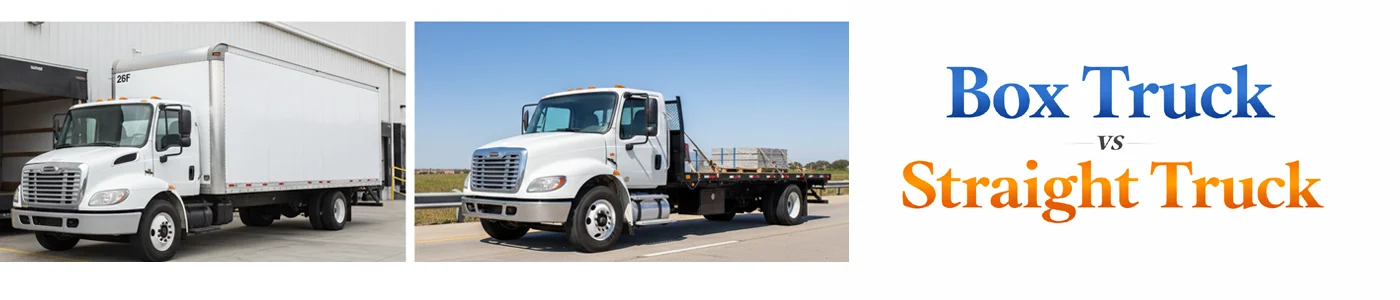
A box truck, also frequently referred to as a cube van, cube truck, or straight box truck, is a chassis cab truck with an enclosed cuboid shaped cargo area. One of the defining characteristics of this vehicle is that the cargo box is typically separate from the cab, though they are both mounted on the same rigid frame. This design often includes a "pass through" door between the cab and the cargo area in smaller models, though in most commercial versions, the two sections are completely distinct.
Common Uses for Box Trucks
- Residential Moving: Perfect for navigating neighborhood streets and driveways.
- Furniture delivery: Providing a weather protected environment for sensitive items.
- Appliance transportation: Often equipped with liftgates for heavy refrigerators or washers.
- Courier and parcel services: Ideal for high frequency stop and go city routes.
- Event and equipment rental transport: Safely moving lighting, sound, and stage gear.
Size and Capacity Options
Box trucks are highly versatile and typically range from 10 to 26 feet in length, providing a wide spectrum of volume for different business needs. Depending on the specific model and chassis strength, payload capacities usually fall between 3,000 and 12,000 pounds.
- Small Box Trucks: Best for localized, small item deliveries.
- Medium Box Trucks: Often used for moving 1-2 bedroom apartments.
- Large Box Trucks: Capable of handling significant commercial inventory.
Advantages of Box Trucks
- Ease of Access: Quick loading and unloading via rear roll up doors, which is vital for busy loading docks.
- Urban Agility: Specifically designed for urban and suburban deliveries where space is at a premium.
- Parking Convenience: Often easier to park and secure in standard parking zones compared to larger rigs.
- Driver Accessibility: Many models do not require a commercial license, widening your potential hiring pool.
Limitations of Box Trucks
- Terrain Restrictions: Limited off-road capability, as they are primarily built for paved city and highway surfaces.
- Weight Constraints: Total payload capacity may be significantly lower than that of heavy duty straight trucks.
- Specialized Loading: Less suitable for heavy, oversized, or industrial loads that require reinforced flooring or crane access.
Understanding Straight Trucks
What Is a Straight Truck?
A straight truck, sometimes called a conventional truck or a "rigged" truck, features a cargo area that is mounted directly onto a heavy duty truck chassis with a reinforced integrated cab. These vehicles are engineered to be far more robust and heavier duty than typical light duty box trucks. Because the power unit and the cargo body are fixed on a single, continuous frame, they offer superior structural integrity for transporting denser and more demanding materials.
Typical Applications
- Regional Freight: Moving palletized goods between distribution centers and retail hubs.
- Construction Materials: Transporting heavy lumber, stone, or metal components to job sites.
- Bulk Food Distribution: Handling large scale refrigerated or dry goods for supermarket chains.
- Industrial Logistics: Transporting machinery and high density manufacturing components.
Size and Capacity Options
Straight trucks are the heavy lifters of the single-chassis world, typically ranging from 14 to 30 feet in total length. They are built to handle much more substantial weight, with payload capacities reaching up to 25,000 pounds or more in Class 6 or Class 7 configurations . This makes them the go to choice for businesses that need to transport heavy machinery, large quantities of liquid, or dense palletized freight across regional lines.
Advantages of Straight Trucks
- Maximum Payload: Significantly larger payload capacity for heavy-density cargo.
- Extreme Durability: Built with industrial grade components designed for heavy duty, high mileage use.
- Customization: Highly customizable for specialized commercial needs, such as refrigeration units or flatbed conversions.
- Longevity: Often boast a longer operational lifespan under harsh working conditions.
Limitations of Straight Trucks
- Limited Maneuverability: Much more challenging to navigate through tight city streets or narrow alleys.
- Operating Costs: Generally higher fuel consumption and insurance premiums due to their size and weight.
- Strict Licensing: These vehicles often require the operator to hold a Commercial Driver’s License (CDL), adding complexity to staffing.
Box Truck vs Straight Truck Head-to-Head Comparison
Payload and Cargo Space
Box trucks are an excellent solution for medium sized loads and high volume, low density goods. However, when the mission involves heavier or bulkier industrial cargo, a straight truck is the superior engineering choice. If your business daily operations involve moving oversized machinery or high weight pallets, the reinforced chassis of a straight truck will provide the necessary safety and legal weight compliance you need.
Maneuverability & Driving Ease
In the realm of driving dynamics, box trucks are much easier to operate, feeling more like a large SUV or van, which makes them perfect for the stop and go nature of urban settings. Straight trucks, while considerably more powerful and stable on the highway, require a higher level of driver skill and experience to navigate tight turns, low clearance bridges, and narrow residential streets without incident.
Fuel Efficiency
From a financial perspective, box trucks generally consume significantly less fuel than their straight truck counterparts. This is due to their lighter overall build and aerodynamic designs tailored for city speeds. This makes box trucks the ideal choice for companies focused on last mile city deliveries and short distance hauls where fuel economy directly dictates the profit margin of every trip.
Maintenance Costs
Because they are built on lighter duty chassis, box trucks often have lower routine maintenance costs and more affordable replacement parts. In contrast, straight trucks may require more frequent and specialized servicing due to the extreme stress placed on their heavy duty engines, air brake systems, and suspension components during industrial use. Keeping a straight truck in peak condition requires a more substantial maintenance budget.
Licensing & Regulations
Regulatory compliance is a major differentiator straight trucks often fall into weight classes that require a Commercial Driver’s License (CDL), along with more frequent DOT inspections and stricter logbook requirements. On the other hand, many popular box truck models stay below the 26,001-pound GVWR threshold, allowing them to be driven by employees with a standard driver’s license, which simplifies the hiring process.
Factors Small Business Owners Should Consider
Type of Business
The first step in your decision process should be a thorough analysis of the products you are transporting. Smaller, lighter, or more fragile loads such as bakery goods, electronics, or clothing favor the nimble nature of box trucks . Conversely, if you are moving heavy goods like industrial parts, liquid tanks, or raw construction materials, the sheer power and weight bearing capacity of a straight truck are indispensable for safe transport.
Delivery Routes & Terrain
Carefully evaluate where your drivers spend the majority of their time. If your routes consist primarily of navigating congested city streets and tight delivery bays, a box truck’s maneuverability is a massive asset. However, for regional transport, frequent highway travel, or deliveries to rugged construction sites and rural areas, a straight truck’s durability and high torque engine will easily win the day.
Budget and Financing Options
Financial planning is key Box trucks usually have a much lower upfront purchase price and maintain a lower cost per mile, making them accessible for startups. While straight trucks are pricier to buy and maintain, they offer superior long term efficiency for heavy duty operations where a lighter truck would simply wear out too quickly. You must balance the initial investment against the projected workload of the vehicle.
Real-World Use Cases
- Moving Companies: Often prefer 26 foot box trucks because they offer high volume for household goods while remaining easy to load and unload in cramped residential neighborhoods.
- Local Delivery Services: Parcel and courier businesses favor smaller box trucks for their speed, fuel efficiency, and the ability to find parking in busy downtown areas.
- Landscaping and Construction Businesses: Straight trucks are the ideal choice here because they can handle heavy equipment, bulk soil, and building materials while offering the structural durability needed for rugged, unpaved terrains.
Tips for Buying Your First Commercial Truck
Inspecting Condition and Mileage
Whether you are buying new or used, a thorough mechanical inspection is non-negotiable. Pay close attention to the engine health, the tread life of the tires, and any signs of rust or stress fractures on the frame. Ideally, you should look for vehicles with relatively low mileage and a fully documented maintenance history, as these factors are the best indicators of future reliability and performance.
New vs Used Trucks
Choosing between new and used is often a matter of balancing risk and capital. New trucks offer the ultimate peace of mind with the latest safety technology and full manufacturer warranties. Used trucks, however, can save your business a substantial amount of money upfront, provided you perform a careful inspection to ensure you aren't inheriting another owner's mechanical problems.
Insurance and Licensing Requirements
Before finalizing any purchase, make sure to get accurate insurance quotes and verify the specific licensing requirements for the vehicle’s weight class. These costs and legal mandates differ significantly based on truck size, gross vehicle weight rating (GVWR), and your intended commercial use. Overlooking these factors can lead to unexpected legal fees or insurance premiums that strain your operating budget.
Conclusion
Ultimately, the choice between a box truck and a straight truck boils down to a clear understanding of your specific daily business needs. Box trucks are the perfect solution for urban deliveries, lighter cargo, and businesses operating on smaller budgets. Straight trucks, however, are purpose built for heavy industrial loads, long term durability, and regional transport . By carefully aligning your choice with your operational priorities and long term growth goals, you can ensure that your truck investment drives your small business toward greater success.
FAQs
Q1: What’s the main difference between a box truck and a straight truck?
A box truck is lighter, easier to maneuver, and ideal for smaller loads. A straight truck can carry heavier cargo and handle tougher work conditions.
Q2: Do I need a commercial license to drive these trucks?
It depends on the truck’s weight. Many box trucks can be driven with a regular license, while straight trucks may require a CDL.
Q3: Which truck is more fuel efficient?
Box trucks are generally more fuel-efficient due to lighter weight and smaller engines.
Q4: Can a small business afford a straight truck?
Yes, but initial costs and maintenance are higher. It’s best for businesses handling heavy or frequent deliveries.
Q5: Which truck is better for city deliveries?
Box trucks are easier to navigate through urban streets and tight corners, making them ideal for city use.