

 November 13, 2025
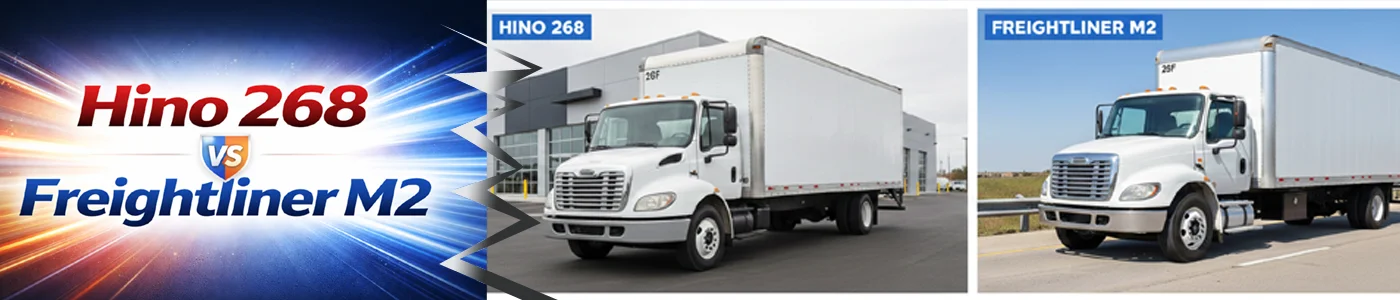
Hino 268 vs Freightliner M2: Which Used Box Truck Is Better for Your Business
Introduction
Running a successful business often means hitting the road with goods to deliver, essential services to provide, or heavy equipment to transport safely. Choosing the right box truck for your fleet is a pivotal decision that can make or break your operational efficiency and overall annual profits. If you’re currently in the market for a reliable and durable used truck, the Hino 268 and Freightliner M2 are two prominent names that constantly come up in industry discussions. Both vehicles offer distinct advantages in the medium-duty sector, but determining which one really delivers better long term value for your specific business model requires a deeper look into their specs. Let’s break it down and see how these trucks compare in real-world scenarios.
Hino 268 Overview
When you think of the precision found in Japanese engineering, mechanical reliability often comes to mind and that’s exactly what the Hino brand brings to the table. The Hino 268 is a premier medium-duty truck specifically designed to handle the rigors of both congested urban environments and steady long-haul operations. With its solid engine performance, reputation for low maintenance needs, and an impressively comfortable cab, it’s no surprise that business owners love this truck for delivery routes, landscaping, and light construction work where uptime is the highest priority.
Key Features
- Diesel engine options ranging from 220 to 260 horsepower
- Automatic and manual transmission options for varied driving styles
- GVWR ( Gross Vehicle Weight Rating ) up to 26,000 lbs
- Modern safety features like anti lock brakes and advanced stability control
Typical Uses
Hino 268 trucks excel in high frequency last mile delivery, regional freight transportation, and service based industries where mechanical reliability and low operating costs are critical to the bottom line. Their ability to survive thousands of hours of idle time and city traffic makes them a favorite for grocery and parcel delivery services.
Freightliner M2 Overview
On the other hand, the Freightliner M2 is a legendary workhorse widely recognized and respected across North America. Built for extreme durability and chassis flexibility, it’s an incredibly common sight in the logistics, utility, and heavy construction sectors. Freightliner’s massive dealer network and excellent parts availability make maintenance much easier for fleet managers, which is a significant advantage for businesses running multiple trucks that cannot afford prolonged periods of downtime.
Key Features
- Engine options from 200 to 350 horsepower for maximum pulling power
- Multiple cab and chassis configurations to fit any industry need
- GVWR up to 33,000 lbs for heavier-duty and industrial-scale needs
- Advanced driver-assist and cutting-edge safety technology
Typical Uses
From heavy duty towing and large-scale delivery to complex vocational tasks like waste management or utility repair, the Freightliner M2 adapts exceptionally well to various business demands. Its modular design allows it to be fitted with everything from refrigerated boxes to flatbeds and specialized cranes, making it one of the most versatile platforms on the road today.
Engine Performance Comparison
The Hino 268 usually offers a smaller, highly fuel efficient engine that is perfectly optimized for city driving and light to medium hauling. This engine is built with a focus on thermal efficiency and durability, meaning its reliability is legendary among fleet owners, often leading to fewer surprises on maintenance bills and fewer emergency shop visits.
The Freightliner M2 , however, gives you access to a broader range of engine displacements that provide more horsepower and torque. This makes it significantly more suitable for moving heavier loads over longer distances and conquering steep highway grades. While the M2’s engine offers superior performance for high weight cargo, it typically operates at slightly higher fuel costs than the leaner Hino powerplants.
Transmission & Drivetrain
Both trucks provide a variety of automatic and manual transmissions, but the Hino 268’s Allison automatic gearbox is frequently praised for its smooth shifting in stop and go city driving. In contrast, the Freightliner M2 gives you access to more heavy duty drivetrain options, including tandem rear axles for much heavier applications. This expanded drivetrain selection can be a deciding factor if your business involves:
- Construction Site Access: Where high torque and traction are required.
- Heavy Payloads: Requiring reinforced axles and specialized gearing.
- Long-Distance Logistics: Where overdrive ratios help with highway cruising.
Cargo Capacity & Versatility
Payload and cargo flexibility are critical components of your ROI. The Hino 268’s GVWR of up to 26,000 lbs works perfectly for most standard delivery and light service businesses, often staying below the CDL threshold depending on the state. The M2, however, steps up the game with a GVWR of up to 33,000 lbs , allowing for much heavier cargo and significantly larger box sizes. Industries like bulk furniture delivery or industrial hardware supply may find the M2 more adaptable to their needs, while local small business owners may find the Hino’s capacity more than enough for their daily operations.
Fuel Economy & Running Costs
Fuel efficiency is where the Hino 268 truly shines, often offering a documented 10–15% better fuel economy than the M2 in comparable environments. Over the long term, these savings can translate into thousands of dollars back into your pocket, especially if your trucks are on the road daily. Freightliner M2 trucks, equipped with bigger, more powerful engines, may cost more at the pump, but their sheer durability and the ability to carry more per trip can offset these fuel costs over the life of the vehicle.
Driver Comfort & Safety Features
Since drivers spend several hours a day in these trucks, the quality of the cab environment matters immensely for retention and safety. The Hino 268 provides a well designed, ergonomic cab with excellent visibility and a tight turning radius, making difficult city maneuvers much easier for the operator. The Freightliner M2 offers a roomier cab environment often equipped with advanced safety tech like lane departure warnings and collision mitigation features that are ideal for fleet owners concerned about driver safety and keeping insurance premiums as low as possible.
Reliability & Longevity
Hino trucks are globally known for their longevity, often reaching the 400,000+ mile mark with nothing more than routine maintenance and fluid changes. Freightliner M2 trucks are robust as well, but because they are often used in more abusive vocational roles, parts can be pricier and some owners report more frequent repairs during heavy duty use. Both trucks offer solid resale value on the used market, though Hino tends to retain its value slightly better specifically in the medium duty, non CDL segment.
Availability & Pricing of Used Trucks
If you are currently looking for a Hino 268 for sale, they are fairly common in the used market across the United States. Prices for a used Hino often range from $30,000 to $60,000 depending on the mileage, year, and box condition. Used Freightliner M2 trucks are also plentiful, but they are often a bit more expensive due to their heavier payload capabilities and larger engine options, typically ranging from $35,000 to $70,000 for a well maintained unit.
Hino 268 vs Freightliner M2: Pros & Cons
Hino 268 Pros
- Excellent fuel efficiency for lower daily overhead
- Legendary Japanese reliability and long engine life
- Lower average maintenance costs over the vehicle lifespan
- Superior visibility and handling for urban deliveries
Hino 268 Cons
- Lower maximum payload capacity compared to the M2
- Less powerful engine options for extremely heavy or oversized loads
Freightliner M2 Pros
- Higher payload capacity and significantly more engine power
- Extremely versatile chassis for multiple heavy industries
- Access to advanced driver assist safety features
Freightliner M2 Cons
- Higher fuel consumption due to larger engine displacements
- Slightly higher maintenance expenses for specialized parts
Real World Use Cases
Delivery Businesses: The Hino 268 is the ideal choice for grocery stores, couriers, and light freight routes where fuel economy and ease of parking are the most important factors.
Moving Companies: The Freightliner M2’s larger payload and ability to carry a 26 foot or 30 foot box makes it perfect for moving large quantities of furniture or industrial appliances in a single trip.
Construction & Logistics: The M2 is almost always preferred for carrying heavier tools, machinery, or building materials where the truck needs to handle both highway speeds and rough job site terrain with ease.
Financing & Insurance Considerations
Both trucks generally have favorable financing options available through commercial lenders, but your insurance rates can vary based on the truck's weight class. The Hino’s lower GVWR may translate into slightly lower monthly premiums for some businesses. In contrast, the Freightliner M2’s status as a heavier duty vehicle could mean higher insurance costs, but it also offers better coverage options for intense industrial tasks that involve higher risk.
Making the Right Choice for Your Business
If your business revolves around frequent city deliveries, tight urban routes, and a need for maximum fuel savings, the Hino 268 is a smart and safe pick. However, if you need more raw power, chassis flexibility, and the ability to haul significantly larger cargo, the Freightliner M2 might deliver better overall value. Before making a final decision, always consider your average daily mileage, specific payload needs, and your internal capacity for handling routine maintenance.
Conclusion
Both the Hino 268 and Freightliner M2 bring unique and valuable strengths to the commercial table. Hino wins the day for fuel efficiency, long term reliability, and cost effective urban operations, while Freightliner excels in raw payload capacity, engine power, and versatility for heavier industrial loads. Ultimately, your specific business needs, your annual budget, and your operational style will determine which truck gives you the best bang for your buck in the long run.
FAQs
Q1: Which truck is cheaper to maintain, Hino 268 or Freightliner M2?
A: The Hino 268 generally has lower maintenance costs due to its simpler, reliable design and fewer heavy-duty components.
Q2: Can I use a Freightliner M2 for city deliveries?
A: Yes, but it’s larger and less fuel-efficient than the Hino 268, making it less ideal for tight urban routes.
Q3: How long do used Hino 268 trucks last?
A: With regular maintenance, Hino 268 trucks can reach 400,000+ miles, making them a durable investment for businesses.
Q4: Are parts for Freightliner M2 readily available?
A: Yes, Freightliner has a large dealer network across North America, though parts may be more expensive than Hino.
Q5: Which truck offers better resale value?
A: Hino 268 often holds its value slightly better due to high reliability and lower operating costs.